

Psychological Perspectives on Introversion and Extraversion
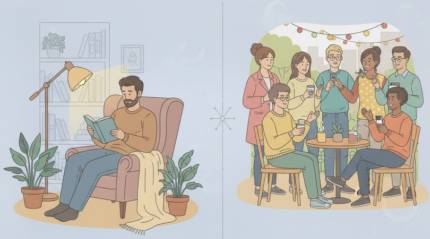
Introversion describes a quiet source of energy oriented toward reflection, depth, and deliberate action. In practical terms, people often wonder about what is the introvert as a lived experience rather than a stereotype, and the answer starts with how someone refuels after stimulation. Instead of chasing constant buzz, the quieter mind leans toward meaningful conversations, well-structured routines, and time for creative incubation. Focused attention, careful listening, and a preference for substance over volume frequently define the day-to-day rhythm.

Across cultures, introverted tendencies can be misunderstood because many environments prize speed over clarity. From a psychological lens, scholars debate how is introvert a personality question should be answered, because trait models link it to stable patterns while acknowledging situational flexibility. Temperament research shows that sensitivity to stimuli, deeper processing, and slower warm-up times are common, yet these features also underpin strategic foresight and meticulous craftsmanship. Many frameworks describe a continuum often called extraversion introversion, which reflects how people recharge and process stimulation without assigning moral value. Seen this way, introversion isn’t shyness or social anxiety; it’s a distinctive energy economy that trades breadth for depth and noise for nuance.
-
![]() Quiet restores cognitive resources and improves long-horizon planning.
Quiet restores cognitive resources and improves long-horizon planning. -
![]() Solitude increases originality by reducing social conformity pressures.
Solitude increases originality by reducing social conformity pressures. -
![]() Listening first accelerates accuracy and trust in collaboration.
Listening first accelerates accuracy and trust in collaboration.

The Real Differences, Without the Myths
Personality science points to contrasting patterns of arousal, motivation, and attention that show up in work, learning, and relationships. At the behavioral level, the real difference between introvert and extrovert shows up in how attention is allocated and environments are chosen, with one leaning toward thoughtful depth and the other toward social intensity. Biology adds texture here by highlighting sensitivity to reward signals and baseline neural arousal as key variables. Cultural norms then amplify or mute these signals, shaping what looks “normal” or “confident.” Labels can help when used as navigational tools rather than cages. In career planning, the framing of introvert vs extrovert can oversimplify nuance, yet it helps clarify common energy patterns for teamwork and leadership. When teams brainstorm, a useful mental anchor for what is the extrovert is a person who thrives with rapid exchange and visible momentum while drawing motivation from frequent feedback. To make this concrete, the comparison below summarizes common tendencies you can adapt to your context.
| Work Domain | Introvert Tendencies | Extrovert Tendencies |
|---|---|---|
| Idea Generation | Reflective incubation, depth-first exploration | Out-loud iteration, breadth-first exploration |
| Meetings | Selective speaking, advance preparation | Spontaneous input, real-time processing |
| Focus | High concentration in quiet settings | High energy in dynamic settings |
| Networking | Few strong ties, purposeful connections | Many loose ties, discovery through volume |
Neither style is inherently better; both contribute essential value when environments are designed thoughtfully. Leaders can rotate formats, offer pre-reads, and alternate between silent ideation and open discussion to include more minds. Teams that balance synchronous buzz with asynchronous reflection capture creativity while preserving cognitive stamina.

Choosing settings that honor quiet concentration unlocks powerful advantages, including reduced error rates and sharper strategic judgment. In plain language, a practical way to explain extraverted meaning is “energized by outward stimuli and social engagement,” which complements the inward orientation of quieter peers. When both orientations collaborate with respect, outcomes tend to improve because planning and momentum coexist. Benefits for quieter professionals often include superior listening, deep work, and resilient autonomy that holds steady under pressure.
Start the Test-
![]() Depth-first attention supports complex problem solving and long projects.
Depth-first attention supports complex problem solving and long projects. -
![]() Listening emphasis improves conflict resolution and client discovery.
Listening emphasis improves conflict resolution and client discovery. -
![]() Autonomy reduces micromanagement needs and boosts reliability.
Autonomy reduces micromanagement needs and boosts reliability.
From Quiet Reflection to Selective Sociability
Variety lives inside the calm temperament, and recognizing the substyles helps people tailor tactics rather than force one-size-fits-all rules. Researchers and practitioners sometimes outline 4 types of introverts, highlighting social, thinking, anxious, and restrained styles that each carry unique strengths. Within that spectrum, a nuanced label like what is extroverted introvert can describe someone who toggles between solitude and selective sociability based on trust, topic, and timing. By matching environments to temperament, quiet pods, written brainstorms, and optional social blocks, organizations harvest more insight from everyone without draining energy reserves.


Clarity starts with noticing what refuels you, what drains you, and when your best thinking emerges. If you are reflecting on am i an introvert, start by noting when you feel most replenished and how you prefer to learn, then compare those patterns across a few weeks. Journaling short snapshots after meetings, calls, or study sessions reveals energy rhythms you can design around. Patterns usually surface quickly when you track context, people, and task type.
Start the TestHow to Interpret Your Introvert or Extrovert Quiz Results
Metrics can guide but should never box you in. A brief, research-aligned introvert extrovert quiz can offer a snapshot, but results should be interpreted as tendencies rather than absolutes or destiny. For deeper insight, a longer introvert extrovert test that maps sensitivity, assertiveness, and social drive provides a richer picture without flattening your individuality. Use any score as a conversation starter with yourself and your team, pairing data with lived experience.

-
![]() Design your schedule with alternating deep work and social blocks.
Design your schedule with alternating deep work and social blocks. -
![]() Use written-first collaboration before live debates for better inclusion.
Use written-first collaboration before live debates for better inclusion. -
![]() Anchor your career choices to environments that match your focus style.
Anchor your career choices to environments that match your focus style.
Introvert, Extrovert, or Ambivert? Discover Your True Personality
Get StartedFrequently Asked Questions
- Do introverts dislike people?Not at all; many value relationships deeply and prefer meaningful, unhurried connection. They often enjoy small groups or one-to-one time where listening and thoughtful dialogue can flourish without noise or hurry. When social time is intentional and buffered by recovery, connection feels rich rather than draining.
- How can parents support an introverted child?Routines that balance quiet play with gentle social practice are ideal. Offer choices about timing, give advance notice before transitions, and praise observation as much as participation. Libraries, nature walks, and creative projects let curiosity bloom while confidence grows at a comfortable pace.
- Can introverts be effective leaders?Absolutely; many excel through preparation, calm decision-making, and individualized coaching. They tend to draw out diverse voices, reduce performative pressure, and build trust by following through. In uncertain times, steadiness and strategic focus become a competitive advantage.
- What assessments can help me understand my style?Start by tracking energy before and after typical activities so patterns are visible. For a simple snapshot, a targeted introvert test can highlight preferences without overclaiming. If you want a broader context, an evidence-informed am I introvert or extrovert quiz can frame your tendencies along a continuum that respects nuance.
- What if I relate to both privacy and social buzz?It’s common to enjoy solitude and also crave lively moments in the right setting. Some people use terms like ambivert to describe a flexible pattern, and others simply match context to intention. In day-to-day planning, recognizing the introvert extrovert blend lets you design weeks that alternate deep focus with energizing connection.
The Latest News
 Introvert or Extrovert Quiz: the Definitive Guide Introvert, Extrovert, or Ambivert? Discover Your True Personality Get Started What This Assessment Reveals About Your Social Energy Most people sense their social batteries charge and drain at different speeds, yet they rarely have a shared language to describe those rhythms. Reliab...
 - 17 December, 2025
- Introvert or Extrovert Test: the Complete Guide to Understanding Introvert, Extrovert, or Ambivert? Discover Your True Personality Get Started What These Assessments Reveal Most people sense a natural rhythm in how they restore energy, relate to groups, and communicate ideas, yet they struggle to name that rhythm clearly. Among the tools designed...
- 16 December, 2025
- Understanding Introverts, Extroverts, and Ambiverts Introvert, Extrovert, or Ambivert? Discover Your True Personality Get Started What the Personality Spectrum Really Means Personality is not a pair of rigid boxes but a spectrum of social energy, attention, and arousal preferences that shifts with context. Rather than assuming people...
- 15 December, 2025
Please Note
This website (introvertorextroverttest.com) is not an official representative, creator or developer of this application, or product. All the copyrighted materials belong to their respective owners. All the content on this website is used for educational and informative purposes only.